I don’t think there is any one answer to this question; it may be different for everyone. But here are a few thoughts for the average American: when Christ said that, “it is easier for a camel to go through the eye of a needle than for a rich person to enter the kingdom of God!…Humanly speaking, it is impossible, but with God everything is possible;” I think He had America on His mind (Mathew 19:16-26, New Living Translation). Considering that only twenty percent of world lives on seventy dollars a day, forty percent of the world lives on less then two dollars a day, and eight percent of the world owns a car, we can see that the average American is rich.
Why does Jesus say it is so hard for a rich person to enter heaven? I think it is because we depend on ourselves and our riches rather then depending on God. Why do I need God: if when I am sick, I can just go to the doctor or the (24 hour) pharmacy and get some medicine, if I am hungry I can make some food or stop by a (24 hour) fast food restaurant, if I don’t have money I can most likely get a job and at least make minimum wage, if when I am bored, depressed, or upset I can distract myself with TV, movies, video games, the internet, or shopping. Why do I need Jesus on a daily basis if all my needs and wants are being met?
I realize that my relationship with Christ should not be based on my needs being met. I am grateful and understand that Christ created me, died for my sins, and has given me grace and a future with Him. I serve Him because of who He is and not what he does for me, but is this enough to make me dependent on Him?
How do I depend on him?
Do I need to become poor? No, I am sure this is a great way for some people to truly depend on God, but that is too literal of a translation of the Bible for me, it is a little ridiculous…(Mathew 19:21-22).
Do I need to live on a budget and give away ALL the excess money to my church or an organization that helps the poor? No, that would be too extreme, besides God has blessed me with money and I need to provide for myself and my family and give some to Him, because that is what the Bible tells me to do…(Mathew 6:19-21 and Mark 12:41-44).
Do I need to give up comfortable life in American and go somewhere else to serve others? No, I have a great job, a house and I can’t leave my parents or extended family; Christ is not calling me to do that…(Matthew 4:21-22, 8:21-22 and 9:9)
Do I need to serve those in prison, those who are sick or travel to a dangerous place to be with others? No, Christ is there to protect me and keep me safe…wait Jesus died doing ministry…and if we are his disciples then…(Mathew 10:28 and 38-39).
It looks like, according to scripture, that disciples of Christ did leave their jobs and their families to follow Him and that it is more important to follow Christ then to tend to parents or extended family or have your own house to sleep in. The more I read and look at Jesus life, the more I see a poor, dangerous, homeless, and radical person; and the more I question whether I am a true disciple of Christ.
My intention is not to make us feel guilt or shame, but to encourage us to think and pray about how God is calling us to have an impact in His Kingdom. I have recently been praying, “Lord break my heart for the things that break your heart,” and then I pray, “Lord put me in the place where I can be most effective for your kingdom.” When I say these prayers, I believe that God will direct my life (through my desires, talents, weaknesses and dreams) into places that I can have an impact in His kingdom. I don’t care what happens to me on this earth, as long as I know I am making a difference in other peoples lives for eternity.
Saturday, October 23, 2010


Wednesday, October 20, 2010
Dependence
Many of the students and staff here at Rohi have a deep and honest faith in Christ. You can see that they really love Him and depend on Him. God has radically changed their lives. Many have come from poor or rough backgrounds and now they are in school with all their needs being met. They thank God for this. They attribute this provision to God. Most students don’t question or doubt God because they see him moving and acting in their lives everyday. He is not distant and unknown; He is active and present in their lives.
 This was most evident when I was meeting in a small group of 18-20 year old male students. I proposed a question that I ask many students in America. I asked, “Can you tell us about your relationship with God, what questions or doubts do you have about Him?” After a pause, a student named Samuel began to speak about all the ways in which he sees God. He began, “I ran away from home when I was a young boy because there were seven children in my family and my mom could not feed all of us. So as the oldest son, I felt that if I left than it would be one less mouth to feed. I left home to live on the streets in Nakuru, begging for food and sniffing glue. After three years on the streets, staff from Rohi found me. I joined the rehabilitation center for some time and then was sponsored to come to Rohi as a student.”
Samuel feels a deep sense of gratitude and the only person he can say thank you to, is God. God is the one who motivated the right people and made the necessary connections to allow Samuel to come and live at Rohi. Samuel understands this and all he can do is cry out to God with complete gratitude. This is the faith of most of the children and orphans we have met at Rohi. Their deep and strong faith in Christ is teaching Sarah and I how to see God and depend on Him more.
Samuel’s faith in God is different from many of the youth in America. Many college-aged students go through a period of doubting their faith and questioning how they were brought up in the church. I am not saying this is bad, just different. In America it is hard to see God. If something good happens we attribute it to our own efforts. In general, in America, we are more dependent on ourselves then on Christ. In many ways, although life is easier and more comfortable in America, it is more difficult to see Christ. Good and evil are masked by comfort and materialism.
After hearing many stories like Samuel's, I came to a point where I had to make a decision. Was it random chance or divine intervention that brought these students to where they are today? Just as so many students have chosen to believe that it was God who saved them, I too see that it was God who has given them a hope and future.
If you believe that it was random chance then you must ask yourself some questions. What was this feeling or burden that the Mathua family (who started Rohi) felt to help these children? Where did it come from? If you believe that they were just good people, I think you must look deeper. It is crazy, especially in a place like Kenya where there is more poverty and less opportunity for finding work that seven children would agree to give up their land and inheritance. And why would a family from the US give up their comfortable life to move to a new and uncomfortable place to help others? And what motivates the 350 families from the US to sponsor these students, pay their school fees, write them letters and come to meet them? What conviction or belief is strong enough to motivate someone to do this and where or with whom does that conviction begin?
I don’t believe that it is chance that motivates people to sacrifice their lives to love others. I do believe that it is the only response that Christians have to the sacrificial life that Jesus lived. It is our only way to say thank you to a God that died so that we could live free. Jesus’ example of living an uncomfortable and sacrificial life should drive us and compel us to live a life modeled after Him; a life that is not for ourselves, not for the fleeting pleasures of the world, but truly and honestly dedication to Him.
But how, in America, do we develop this kind of faith that motivates us to sacrifice our lives for others? Anyone who has been on a mission trip knows it is easy to see Christ and love others when you go abroad, but what happens when we come back to our comfortable and distracted lives in the US? Where does the passion and conviction go, how do we maintain it?
 | |
| Samuel |
 This was most evident when I was meeting in a small group of 18-20 year old male students. I proposed a question that I ask many students in America. I asked, “Can you tell us about your relationship with God, what questions or doubts do you have about Him?” After a pause, a student named Samuel began to speak about all the ways in which he sees God. He began, “I ran away from home when I was a young boy because there were seven children in my family and my mom could not feed all of us. So as the oldest son, I felt that if I left than it would be one less mouth to feed. I left home to live on the streets in Nakuru, begging for food and sniffing glue. After three years on the streets, staff from Rohi found me. I joined the rehabilitation center for some time and then was sponsored to come to Rohi as a student.”
 Samuel feels a deep sense of gratitude and the only person he can say thank you to, is God. God is the one who motivated the right people and made the necessary connections to allow Samuel to come and live at Rohi. Samuel understands this and all he can do is cry out to God with complete gratitude. This is the faith of most of the children and orphans we have met at Rohi. Their deep and strong faith in Christ is teaching Sarah and I how to see God and depend on Him more.
Samuel’s faith in God is different from many of the youth in America. Many college-aged students go through a period of doubting their faith and questioning how they were brought up in the church. I am not saying this is bad, just different. In America it is hard to see God. If something good happens we attribute it to our own efforts. In general, in America, we are more dependent on ourselves then on Christ. In many ways, although life is easier and more comfortable in America, it is more difficult to see Christ. Good and evil are masked by comfort and materialism.
After hearing many stories like Samuel's, I came to a point where I had to make a decision. Was it random chance or divine intervention that brought these students to where they are today? Just as so many students have chosen to believe that it was God who saved them, I too see that it was God who has given them a hope and future.
If you believe that it was random chance then you must ask yourself some questions. What was this feeling or burden that the Mathua family (who started Rohi) felt to help these children? Where did it come from? If you believe that they were just good people, I think you must look deeper. It is crazy, especially in a place like Kenya where there is more poverty and less opportunity for finding work that seven children would agree to give up their land and inheritance. And why would a family from the US give up their comfortable life to move to a new and uncomfortable place to help others? And what motivates the 350 families from the US to sponsor these students, pay their school fees, write them letters and come to meet them? What conviction or belief is strong enough to motivate someone to do this and where or with whom does that conviction begin?
I don’t believe that it is chance that motivates people to sacrifice their lives to love others. I do believe that it is the only response that Christians have to the sacrificial life that Jesus lived. It is our only way to say thank you to a God that died so that we could live free. Jesus’ example of living an uncomfortable and sacrificial life should drive us and compel us to live a life modeled after Him; a life that is not for ourselves, not for the fleeting pleasures of the world, but truly and honestly dedication to Him.
But how, in America, do we develop this kind of faith that motivates us to sacrifice our lives for others? Anyone who has been on a mission trip knows it is easy to see Christ and love others when you go abroad, but what happens when we come back to our comfortable and distracted lives in the US? Where does the passion and conviction go, how do we maintain it?
Sunday, October 17, 2010
Just an average day in Kenya
I want to tell you a story about a recent rodent encounter in our home. Well it began one night when Sarah frantically yelled, “Nate, its a rat, quick get it!!” I calmly replied, “Sarah you can’t just catch a rat with your hands, especially when you can’t see him, you have to get a rat trap.” Sarah did not like this answer because the rat was in the kitchen. We could not find it so I set the rat trap out that night. In the morning we did not catch a rat, but he had left plenty of evidence that he had enjoyed our food during the night. Sarah was bothered. I was content. Late in the day Sarah exclaimed, “Nate it’s the rat, I can hear him, he is still in here somewhere!” I look for him everywhere and don’t find him. I laugh at my bride and tell her she is paranoid as she had confessed that she dreamt the night before of rats invading our house. I reminded Sarah that you don’t just catch a rat with your hands; you have to use the trap.
On the second day, we still came up empty. Later that day Sarah was in the bedroom and calmly said, “Nate I know he is in here.” Of course, by this time, I thought Sarah is crazy and just hearing things. But like a good husband I went into the room to prove to her that there was not a rat in the room. So I looked behind the dresser and sure enough there was a cute little rat. Sarah ran out of the room and shut the door and said, “Don’t come out till you catch the rat!” She was not messing around. I knew at that moment that I must emerge with the rat; our marriage depended on it. I asked for a few items to catch Sarah’s nemesis, including a stick, trashcan, and a trash bag. The battle was on….. Me vs. the Rat. The battle ensued. Back and forth it went, I would scare him out from behind the dresser, then try and throw the trash can on him and miss, and then he would go back behind the dresser. All Sarah could hear from outside the room was a lot of banging, clanging and cursing. This dance continued for a good 15 minutes. But then there was a lull in the battle and I could not see or hear him any more. When Sarah heard the noise stop, she said, “ Did you get him?!” Now, out of breath, I say weakly,“ Uhhhh, no. I can’t find him.” After a few minutes of looking I found him….


After a few more minutes, I emerged the Victor. I trapped him in the trashcan and slipped him into the trash bag. I walked him outside and smashed his head with a rock. The sheep looked on with sad faces heads when he died. Sarah cheered, I was a bit saddened, and the rat was unresponsive.
 |
| R.I.P. |
Sunday, October 10, 2010
Where is Home?
Is it where I grew up? Is it the town where I went to school and Church? Is it where my friends and family are? Is it the place where I feel most comfortable and safe? Is it knowing myself and my purpose in the world? Is it just where I find myself at a particular place and time? Or is it where I can see and experience Christ the most; the place where I feel Him calling me to? Maybe home is all of these things.
But what about those people who have lost their parents; they have no family, church, or place where they can go and feel comfortable and safe. What about those people who are abused physically or sexually by those they trusted? Where is home for these people?
These are the questions that I have been asking myself the past few weeks. Sarah and I have been hearing the stories of students who have no family, no one to call mom or dad, no one to touch them and hold them, and no house to go to on the holidays. And some students who do live with families have been abused physically or taken advantage sexually. Most of these students have a deep and really faith in God. He is all they have to call home.
But what about those people who have lost their parents; they have no family, church, or place where they can go and feel comfortable and safe. What about those people who are abused physically or sexually by those they trusted? Where is home for these people?
These are the questions that I have been asking myself the past few weeks. Sarah and I have been hearing the stories of students who have no family, no one to call mom or dad, no one to touch them and hold them, and no house to go to on the holidays. And some students who do live with families have been abused physically or taken advantage sexually. Most of these students have a deep and really faith in God. He is all they have to call home.
Tuesday, September 28, 2010
Hiking


This weekend we were invited to join 40 Rohi students on a hike to a near by town. This was in preparation for a hike up Mount Kenya in November. We were very excited, because both Sarah and I love to hike, however we did not realize what we were getting ourselves into. We started off at 7am and hiked for 4 hours through town and up a mountain to another small town. We crossed a few rivers and saw some beautiful vistas. We ate lunch which consisted of beans, rice, cabbage, and chipoti. then started back. We decided to go a different way home which was to be shorter. This was not the case. We walked through corn fields, crossed a marshy river, and walked through pouring rain. After another 4 hours we finally arrived at home. The last hour was rough as our legs were tired and aching. Sarah and I were both out of shape and after about 8 hours of hiking and 15 miles later, we were spent. But we enjoyed the time walking, talking, and eating with the students.
Tuesday, September 7, 2010
Comfort
Why do I try to make my life comfortable wherever I am?
Since I have been in Kenya I have been out of my comfort zone. I have been seeking God more during this time. But I am also noticing that I am trying to make the life as comfortable as possible.
I find that when I strive to be comfortable I tend to be less dependent on God. The distractions that come with being comfortable pull me way from my relationship with Christ. Do I have to remain in a state of being uncomfortable to be close with Christ? If so , how do I create that when my tendency is to seek comfort. Or can I maintain my relationship with Christ while I am comfortable?
Jesus purposefully lived an uncomfortable life, at least during His three years of ministry. He was always on the move. He had no permanent home. I guess what I am seeking is, how do I remain in constant state of dependency on Christ, like so many of the Kenyan Christians that I have met.
Since I have been in Kenya I have been out of my comfort zone. I have been seeking God more during this time. But I am also noticing that I am trying to make the life as comfortable as possible.
I find that when I strive to be comfortable I tend to be less dependent on God. The distractions that come with being comfortable pull me way from my relationship with Christ. Do I have to remain in a state of being uncomfortable to be close with Christ? If so , how do I create that when my tendency is to seek comfort. Or can I maintain my relationship with Christ while I am comfortable?
Jesus purposefully lived an uncomfortable life, at least during His three years of ministry. He was always on the move. He had no permanent home. I guess what I am seeking is, how do I remain in constant state of dependency on Christ, like so many of the Kenyan Christians that I have met.
Tuesday, August 24, 2010
What I am learning


Going to Kenya


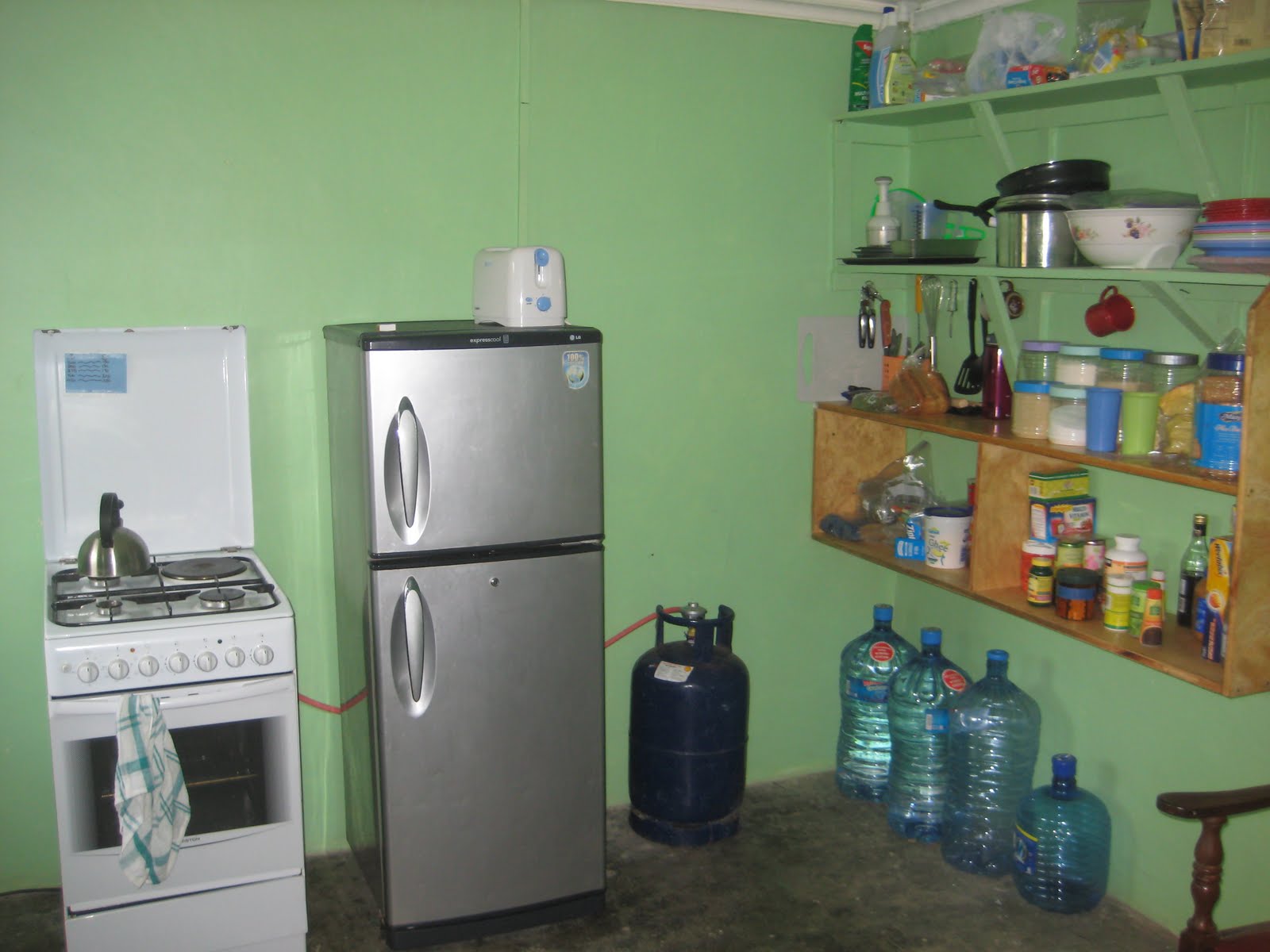 We came to Rohi with the mind set, “How can we encourage and learn from the people here and support the ministry that is already taking place?” We came to live as closely as possible to the students and staff here. We know we are Americans, and we are not trying to pretend as if we are not, but we want to learn from them and embrace their culture and lifestyle as much as possible. This includes: how they eat, cook, clean, wash their clothes, how they buy food, and take public transit. We are learning to embrace their perspectives on time, relationships, and God.
 Even after all this we realize how different we are and how despite our efforts to live in the same way, we still live in excess. Even with our small cement house, our monthly income, the clothes and things we own, we are still living above the means of the average Kenyan. With the extras we can afford like toilet paper, a cup of hot chocolate, a meal at a restaurant, having a hot shower, electricity, a roof that does not leak or let in mosquitoes, and a toilet that flushes; we realize we have many earthly comforts. How then do I live or respond?
Do I feel sorry for people that don’t have these luxuries that we take for granted and assume that everyone has? Do I feel blessed because I do have these things? Or do I just leave it as an observation?
See a video of our home: http://www.youtube.com/watch?v=9GuclEARk48
Wednesday, August 4, 2010
Ghana
 Hello family & friends! Sorry it’s taken us so long to update you all, we have been on the move and not much internet access till now. Our time in Ghana flew by so fast and we have just recently arrived in Kenya. We wanted to share a little bit from our time in Ghana.
I think both Nate and I were most inspired and humbled by the staff and leadership of the
ministry we worked with called Meaningful Life International. The leaders of MLI are so legit, they really know what they are doing and have sacrificed so much to do ministry in Ghana. All of them could easily have chosen an easier more comfortable way of life but have chosen to do ministry among the poorest of the poor. We led a team of six from Cornerstone and paired with the MLI team and did a wide variety of projects. Some of the projects we did included visiting a school for the deaf and blind, medical outreach camps in the rural villages, a ground breaking
ceremony to commence the start of the hospital building, door-to door prayer, and bringing clothes, shoes, school supplies and food to poor orphanages.

The medical outreach camps were most
impressive as they were so organized and the people are so appreciative of the care. Another RN and myself lined all the children up and administered de-worming medicine as most of the children get worms from the water or from not wearing shoes and walking through feces from animals. The children are so eager to take medicine and receive care, even the babies don’t cry at all when we assess them, so different than in the U.S.!

wanted to share her story with you. Her name is
Belinda, she is 6 years old and lives in a mud hut in a village called Tsopoli. She cannot walk or
talk because she suffers from hydrocephalus. Her head is so enlarged and heavy that she can barely hold it up and shakes her head constantly due to the pressure. Her mother told us that
she tries to keep Belinda hidden in the hut as the village seems to outcast her because of the deformity. Her mother cannot afford to have the surgery or the outpatient follow up care, and so Belinda’s quality of life and life expectancy is not very good at all. This would be a very treatable condition in the states, but not in Ghana. We were able to pray healing over Belinda at church on Sunday.
Belinda’s story is an example of the large need for why MLI is building a missionary hospital. Belinda’s surgery only costs approximately $3,000 and through the medical outreach camps, they are able to find children like Belinda that they can refer to the mission hospital. MLI is in great need of more financial funds to help build the missionary hospital. Both Nate and I feel very connected to the leaders in MLI ministry and hope to support them more in the future.
Prayer
Pray for Belinda that the Lord will bring healing and peace to her and her family.
Pray for Godwin and Lenucia and the MLI team as they raise funds to build the hospital and care for the people with the clean water projects and medical outreaches.
Prayer
Pray for Belinda that the Lord will bring healing and peace to her and her family.
Pray for Godwin and Lenucia and the MLI team as they raise funds to build the hospital and care for the people with the clean water projects and medical outreaches.
Please pray for peace in Kenya. Today, August 4th, they are voting for a new constitution. It is quite controversial so please pray that there will be no fighting amongst the tribes.
We love you and miss you much
-Nate and Sarah
We love you and miss you much
-Nate and Sarah
Saturday, April 17, 2010
Poverty
How can I effectively help to alleviate poverty? my first thought is through improving healthcare and education, offering job training and microfinancing, and by enforcing laws. However, I need to realize that these are not the only aspects of poverty and that I need to change my perspective and rearrange my priorities in order to alleviate poverty.
Aspects of Poverty
Poverty deals with more than just material things or broken systems such as (finances, healthcare, education, food, sanitation); Poverty is also the result of broken relationships (with God, self, others and the rest of creation). According to this more complete understanding of poverty, we are all in need. When we realize that we are on the same level as everyone else (relationally), maybe then we will stop and begin to truly listen and learn from others. We will begin to see differences as not right and wrong but as a difference of priorities and perspective. Restoring these broken relationships is of primary importance in alleviating poverty.
Priorities
Unfortunately, my priority as a Christian, middle-class American is to solve poverty in an economic or material way. Other cultures do it through relationships. Forming a community is primary in their culture; it supersedes any need. Because without the community, no change can ever be sustained. Before we can talk about healthcare, jobs, and justice, we must first be friends. Before we can effectively work on these issues a community must be formed.
Here is an example from my classroom that helps me understand this concept. The most important thing that needs to happen if I want any learning to take place is to build rapport with my students. It is important to spend class time learning about each other. Especially at the beginning I must form a safe, trusting, and respectful community before we begin learning. And throughout the year we must maintain and build that relationship. There is better student “buy in,” less behavioral problems, more time to learn. Developing a strong community is essential if any learning is to take place.
Perspective
I have a ridiculous belief that I have the solution or the ability to alleviate poverty. When I try to help with all of my ideas, programs, and money I make others feel powerless, worthless, or hopeless. When it is ‘my idea’ it is not ‘their idea.’ I have robbed them of one of their most intrinsic human characteristics, the need to create (the ability to imagine and use our God given gifts and talents to carry out that dream). I am also taking their sense of dignity, pride, and confidence. By acting as if I am superior or have all the answers, I make others feel inferior. However, by allowing others to serve, teach, guide, and care; they develop a sense of self-worth, joy, hope, dignity, and accomplishment.
It is the same in the classroom. The best way for the students in my classroom to learn is when I say nothing and allow them to figure it out. Educators refer to this moment as the ‘Ahha’ moment. It is one of the most rewarding words to hear in a classroom. When I allow students to create a project or to solve a problem by themselves, they feel smart and proud. When they do make these discoveries or get to create something by themselves, I have seen that they become more excited, more interested, and have more confidence in themselves. The sad part is most of the time it is I doing the talking and uncovering the mysteries. When I steal opportunities of achievement and discovery from the students then they become unmotivated and dependent.
Aspects of Poverty
Poverty deals with more than just material things or broken systems such as (finances, healthcare, education, food, sanitation); Poverty is also the result of broken relationships (with God, self, others and the rest of creation). According to this more complete understanding of poverty, we are all in need. When we realize that we are on the same level as everyone else (relationally), maybe then we will stop and begin to truly listen and learn from others. We will begin to see differences as not right and wrong but as a difference of priorities and perspective. Restoring these broken relationships is of primary importance in alleviating poverty.
Priorities
Unfortunately, my priority as a Christian, middle-class American is to solve poverty in an economic or material way. Other cultures do it through relationships. Forming a community is primary in their culture; it supersedes any need. Because without the community, no change can ever be sustained. Before we can talk about healthcare, jobs, and justice, we must first be friends. Before we can effectively work on these issues a community must be formed.
Here is an example from my classroom that helps me understand this concept. The most important thing that needs to happen if I want any learning to take place is to build rapport with my students. It is important to spend class time learning about each other. Especially at the beginning I must form a safe, trusting, and respectful community before we begin learning. And throughout the year we must maintain and build that relationship. There is better student “buy in,” less behavioral problems, more time to learn. Developing a strong community is essential if any learning is to take place.
Perspective
I have a ridiculous belief that I have the solution or the ability to alleviate poverty. When I try to help with all of my ideas, programs, and money I make others feel powerless, worthless, or hopeless. When it is ‘my idea’ it is not ‘their idea.’ I have robbed them of one of their most intrinsic human characteristics, the need to create (the ability to imagine and use our God given gifts and talents to carry out that dream). I am also taking their sense of dignity, pride, and confidence. By acting as if I am superior or have all the answers, I make others feel inferior. However, by allowing others to serve, teach, guide, and care; they develop a sense of self-worth, joy, hope, dignity, and accomplishment.
It is the same in the classroom. The best way for the students in my classroom to learn is when I say nothing and allow them to figure it out. Educators refer to this moment as the ‘Ahha’ moment. It is one of the most rewarding words to hear in a classroom. When I allow students to create a project or to solve a problem by themselves, they feel smart and proud. When they do make these discoveries or get to create something by themselves, I have seen that they become more excited, more interested, and have more confidence in themselves. The sad part is most of the time it is I doing the talking and uncovering the mysteries. When I steal opportunities of achievement and discovery from the students then they become unmotivated and dependent.
Tuesday, April 6, 2010
Gratitude
"It is hard for me to accept that the best I can do is probably not to give but to receive. By receiving in a true and open way, those who give to me can become aware of their own gifts. After all, we come to recognize our own gifts in the eyes of those who receive them gratefully, Gratitude thus becomes the central virtue of a missionary. And what else is the Eucharistic life than a life of gratitude?" -Gracias by Henry Nouwen
Subscribe to:
Posts (Atom)